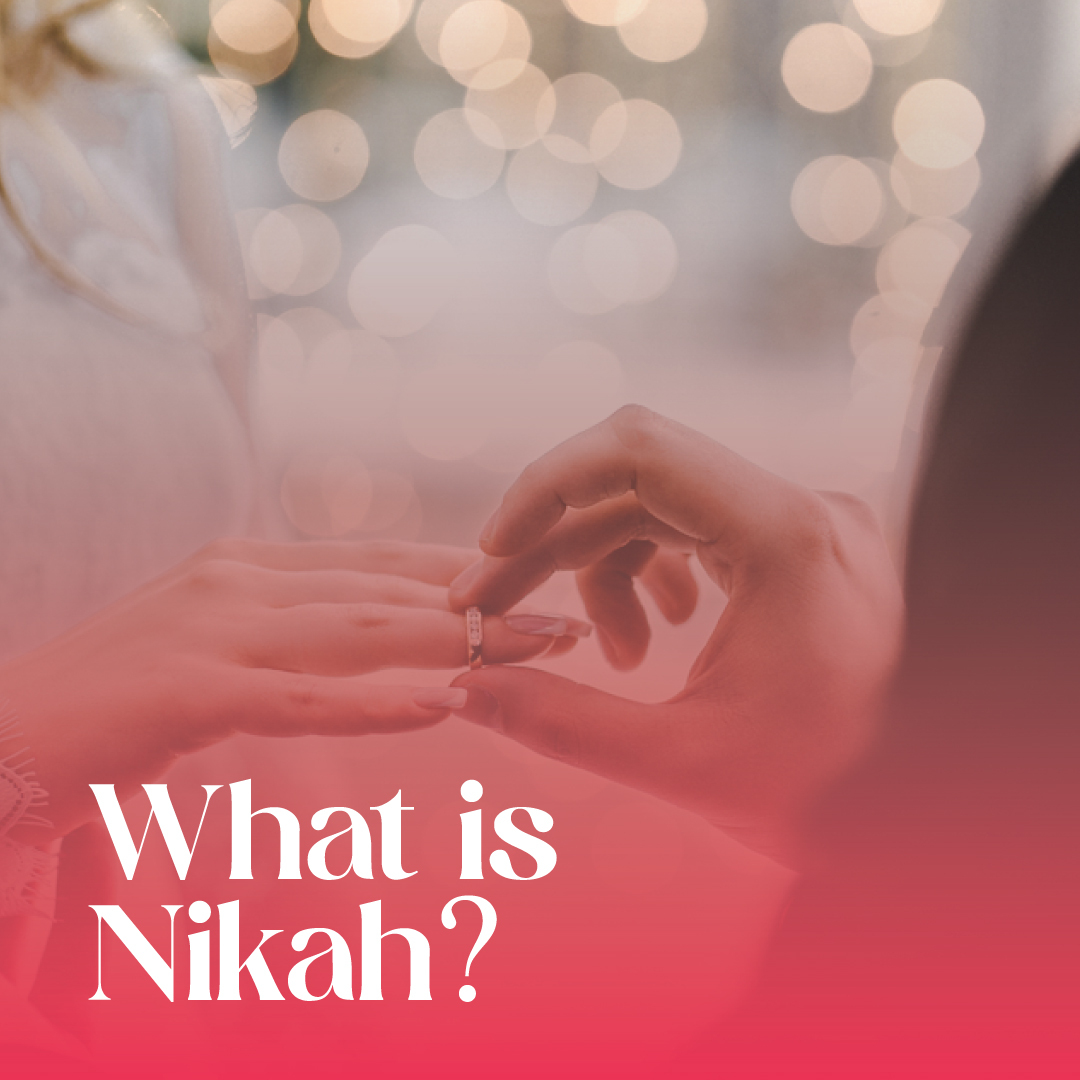
Nikah is the Islamic marriage contract: a legally and spiritually binding agreement between a man and a woman, built on mutual consent, witnessed publicly, and accompanied by a mahr (a mandatory gift from the groom to the bride). It is not a sacrament in the Christian sense, and it is not merely a social custom either. It is a contract ('aqd) that Allah describes as a "solemn covenant" (mithaqan ghalizan, Surah An-Nisa 4:21), a powerful Qur'anic expression also used for other solemn covenants, including the covenant of the Prophets. Quran Once a nikah is validly contracted, with consent, a wali (guardian) where required, the required witnesses, and the bride's right to mahr established, a couple is as fully and legally married in Islam as any marriage can be, regardless of whether a wedding celebration has yet taken place.
The Meaning of Nikah
The Arabic word nikah (نِكَاح) carries the meanings of marriage and marital intimacy: it refers to the legal bond itself, and to the intimacy that bond makes lawful. Islam Web Classical Islamic jurisprudence (fiqh) treats nikah as a legal contract with religious and spiritual significance. Unlike a business contract, it should not be entered into casually or dissolved frivolously, and acts within marriage can carry religious reward (ajr) when carried out sincerely and in accordance with Islam. Sunnah
This is the overview. The deeper jurisprudential detail, including madhab-by-madhab rulings, contractual clauses, and scholarly disagreements, is covered in full in our dedicated Fiqh of Nikah guide.
Is Nikah an Engagement, or a Full Marriage?
This is, by a wide margin, the single most common point of confusion people search for, and the answer matters practically, not just academically: a validly contracted nikah is a complete, Islamically binding marriage, not an engagement. From the moment the conditions below are met (consent, wali where applicable, the required witnesses, and a valid offer and acceptance, with mahr remaining the bride's obligatory right), the couple is married. Intimacy becomes lawful between them, inheritance rights begin to apply, and ending the relationship afterward requires a recognised Islamic process of dissolution, not simply "breaking it off." Islam-QA
What's often mistaken for an engagement is khitbah, the proposal stage that precedes nikah, where families agree in principle to pursue marriage but no contract has yet taken place. Confusing khitbah with nikah is where a lot of real-world problems start, including couples who believe they are "informally married" after a private khutbah or family dua, when no valid offer and acceptance with the required witnesses ever took place. A written or signed contract is not itself required for the religious validity of nikah, and the marriage can also be valid even if the amount of mahr was not specified at the time. IslamQA Many couples get clarity on this exact stage by reading about courting for nikah in Islam, which covers what's appropriate before the contract itself is concluded.
Essential Conditions for a Valid Nikah
For a nikah to be religiously and legally valid, Islamic scholarship across all four Sunni schools of thought agrees on a core set of conditions, though the schools differ on some of the finer points below.
Consent of Both Parties
A woman's consent is central to nikah, although the classical schools differ over some questions of guardianship and the marriage of a virgin. In the Hanafi school, a sane adult woman cannot be forced into marriage and has independent legal capacity to marry. Classical Maliki, Shafi'i, and some Hanbali positions recognise a limited right of ijbar for a father in the case of a virgin daughter, subject to specific conditions. The Prophet ﷺ rejected the marriage of Khansa bint Khidam, a previously married woman whose father had married her against her wishes (Sahih al-Bukhari 5138).
Offer and Acceptance (Ijab and Qabul)
The contract itself is formed through ijab (offer) and qabul (acceptance): a clear, spoken exchange, typically delivered by or on behalf of each party, in the same sitting (majlis), heard and understood by both sides and the witnesses present. This verbal exchange, not the wedding celebration afterward, is the actual legal moment the marriage comes into existence.
The Role of the Wali (Guardian)
This is where the four madhabs genuinely differ, and it's worth being precise about it rather than flattening the disagreement.
The majority view, held by the Shafi'i, Maliki, and Hanbali schools, treats a wali's involvement as an absolute condition for a woman's nikah to be valid, based on the hadith "There is no nikah without a wali" (commonly cited as Sunan Abu Dawud 2085; Sunan Ibn Majah 1881; Jami' at-Tirmidhi 1101). Under this view, a woman cannot independently contract her own marriage even with her full consent. The wali must act on her behalf.
The Hanafi school, followed by the majority of Indian Muslims, takes a different, more permissive position: a sane, adult (baligh) woman may contract her own nikah, or appoint someone to do so on her behalf, without requiring her wali's involvement, based on the hadith "A previously married woman has more right over herself than her guardian" (Sahih Muslim 1421) and the general Hanafi reading of a woman's independent legal capacity once she reaches maturity. In practice, though, most Hanafi jurists still consider wali involvement strongly recommended. If a woman marries someone clearly unsuitable without her family's knowledge, Hanafi fiqh gives the wali grounds to contest the marriage on kafa'ah (suitability) rather than consent itself. This suitability question is also central to a related and often misunderstood topic: see is inter-caste nikah permissible in Islam.
Neither position treats the woman's own consent as optional. The disagreement is specifically about whether a guardian's formal involvement is a condition of validity or a strong recommendation.
Witnesses
Witnesses are required for a valid nikah across the four Sunni schools, although the timing and qualifications differ between them. The Hanafi school accepts either two male witnesses or one male and two female witnesses, while the Shafi'i and Hanbali schools require two male witnesses. The Hanafi, Shafi'i and Hanbali schools require the witnesses at the contract itself, while the Maliki school allows witnessing to take place no later than before consummation. A nikah contracted in total secrecy, without witnesses, is not considered valid by any of the four schools, which is also why it's treated separately from the question of a public walima celebration.
Mahr (the Obligatory Gift)
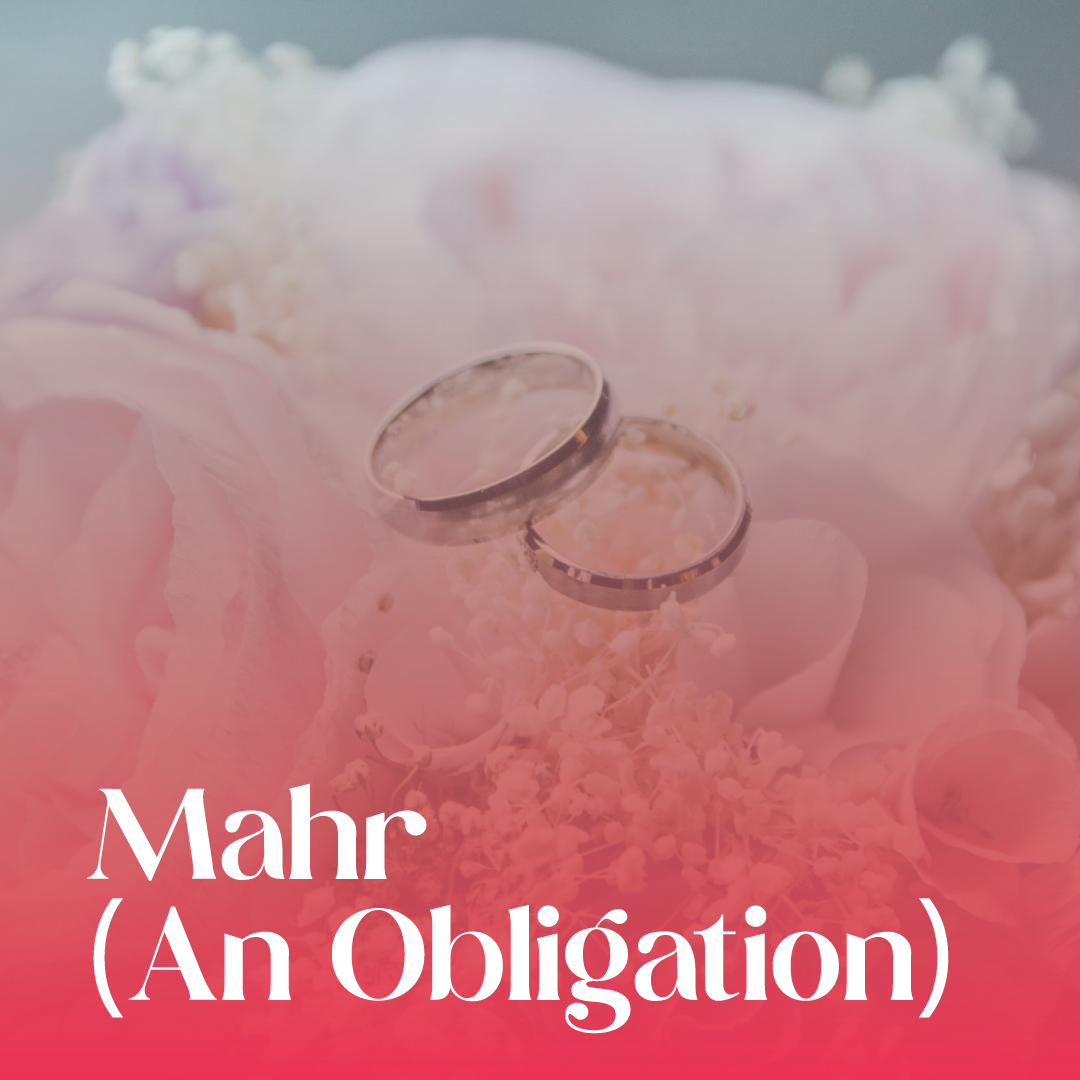
Mahr is the bride's unconditional right, given by the groom, commanded directly in the Quran: "And give the women [upon marriage] their [bridal] gifts graciously" (Surah An-Nisa, 4:4). It is not a bride price or payment for marriage. It belongs to the bride alone, to use or keep as she wishes, and it is owed regardless of the couple's financial circumstances. However, specifying the amount of mahr at the time of nikah is not itself a condition for the validity of the marriage; if no amount is agreed, the wife remains entitled to the mahr due under the applicable fiqh rules.
There is no fixed maximum (Surah An-Nisa, 4:20, explicitly permits even a substantial amount as mahr). On a minimum, the schools differ slightly: the Hanafi school sets a practical minimum of ten dirhams, the Maliki school sets three, while the Shafi'i and Hanbali schools hold that anything of recognized value is sufficient, with no fixed floor. We cover specific mahr amounts, deferred mahr, and common disputes in detail in how much mahr should be given in Islam.
How a Nikah Ceremony Is Conducted
While the contract itself is simple (offer, acceptance, the required witnesses and other applicable conditions, with mahr remaining the bride's obligatory right), the ceremony around it typically follows a recognizable sequence, rooted in sunnah practice:
Khutbah al-Nikah. A short sermon, usually opening with specific Quranic verses, delivered before the contract is finalized.
Ijab and Qabul. The formal offer and acceptance, spoken clearly and audibly.
Presence of the required witnesses and the wali (where applicable).
Agreement and recording of the mahr, specified clearly where an amount has been agreed, whether prompt or deferred.
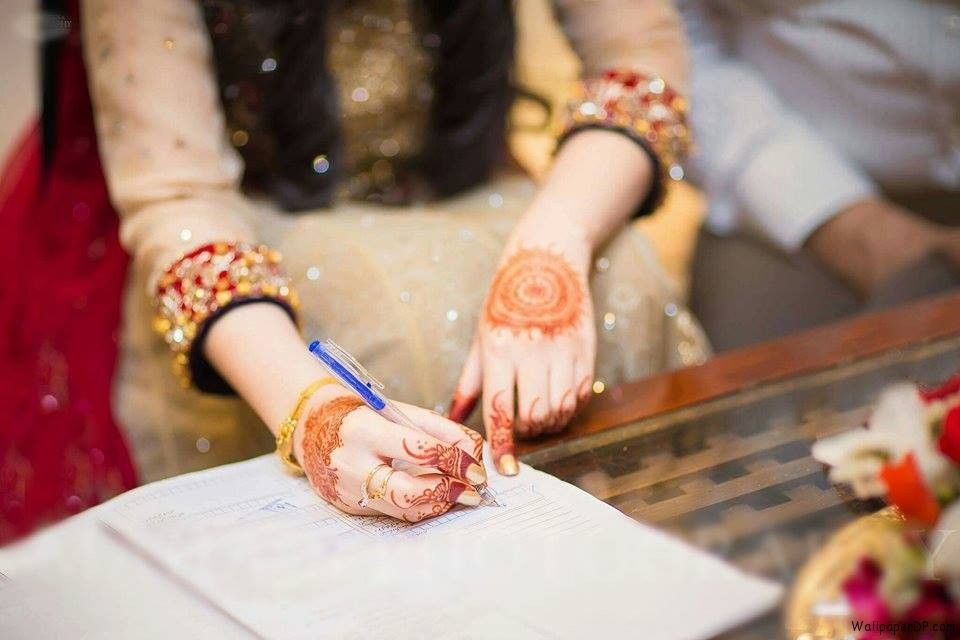
Signing of the nikah nama, the written marriage contract, which today serves as important practical documentation of the marriage, although a written document is not itself required for the Islamic validity of nikah. Islam-QA
Dua for blessings on the couple.
The sunnah strongly favors keeping this simple and unburdened by excessive cost or display, a principle we cover in full in sunnah of a simple nikah. Many couples also observe specific duas before and after the contract. See dua to be made before nikah and dua to be made after nikah. The celebratory feast that typically follows, the walima, is a distinct, separate occasion from the nikah contract itself.
What Makes a Nikah Invalid
A nikah can fail to meet Islamic requirements in a few distinct ways, depending on the requirements of the relevant madhab, for example, where the necessary offer and acceptance do not take place, or where the required witnessing never occurs. Mahr remains an obligatory right of the bride, but failure to specify its amount at the time of nikah does not ordinarily invalidate the marriage. Qur’an 2:236 itself addresses a marriage in which no mahr had yet been designated.
One specific form is invalid by unanimous agreement across all four Sunni madhabs: nikah mut'ah, a fixed-term "temporary marriage" that was permitted at an earlier stage before being finally and permanently prohibited by the Prophet ﷺ: "O people, I had permitted you mut'ah... Allah has prohibited it until the Day of Resurrection" (Sahih Muslim 1406d). This is one of the points where Hanafi, Shafi'i, Maliki, and Hanbali scholarship are in agreement.
Why Nikah Matters in Islam
Nikah is described by the Prophet ﷺ as his own sunnah: "Marriage is from my sunnah; whoever turns away from my sunnah is not of me" (Sunan Ibn Majah 1846). The Quran frames its purpose in terms that go well beyond companionship alone: "And among His signs is that He created for you from yourselves mates that you may find tranquility in them; and He placed between you affection and mercy" (Surah Ar-Rum, 30:21). Sakinah (tranquility), mawaddah (affection), and rahmah (mercy) are described as the direct fruit of the bond nikah creates, not abstract ideals, but its stated, practical purpose.
Nikah is also framed as protective. The Prophet ﷺ told young men capable of marriage to marry, because doing so "lowers the gaze and guards chastity" (Sahih al-Bukhari 5065-5066), the same protective purpose behind Islam's broader guidance on avoiding zina, for which marriage provides a lawful means of protecting one's chastity. This is also why the hadith encourages those who are able and ready for marriage to marry, a point we cover more fully in why early marriage matters in Islam.
Nikah and Civil Registration in India
A nikah validly solemnised under Muslim personal law is recognised as a marriage in India, subject to applicable Indian law. Formally registering the marriage, with the relevant registration authority under the rules applicable in your state or Union Territory is still worth doing in practice. A registered certificate makes life easier for passports, visas (especially for NRI spouses), and everyday proof of marriage, even though it's not what makes the nikah itself valid. Registration requirements vary by state and Union Territory, so it's worth checking what applies where you live.
Rights and Responsibilities in Nikah
Nikah establishes mutual obligations, not a one-sided arrangement. The husband carries a financial responsibility (nafaqah) toward his wife as a general rule, regardless of her own income, and both partners owe each other kindness, consultation, and good character in daily life. We cover each side of this in depth separately. See your husband's rights over you in Islam and duties of a wife, since each deserves more space than a summary section here can give.
Finding a Spouse Through a Matrimony Platform: Is It Halal?
This comes up often, and reasonably so. Using a platform to find a spouse is not inherently impermissible. It's simply a modern tool serving the same purpose marriage proposals have always served: connecting two people and their families with a genuine, stated intention to marry. What makes the process permissible depends on both how the platform is structured and how it is used: with sincere marital intent, appropriate boundaries before nikah, and (where relevant) family or wali involvement in line with the conditions above. NikahForever is built around exactly that intention, with verification designed to keep the process serious and the community genuine.
Thinking about taking this step yourself? Explore NikahForever and see how millions of members and over 70,000 confirmed nikahs have come from approaching marriage the way this guide describes: with clarity, the right conditions in place, and genuine intention from the start.