Islam sets no single fixed amount for mahr across all schools. The Hanafi school places the minimum at ten dirhams of silver (roughly 30.6 grams, about ₹7,000 at current rates), while the Shafi'i and Hanbali schools accept any mutually agreed item of value, even an iron ring. There is no upper limit, but the Prophet ﷺ strongly encouraged keeping mahr simple and affordable. The right amount depends on the husband’s means, the bride’s circumstances, customary mahr for women comparable to her, and what the bride and groom agree is fair.
At NikahForever, mahr comes up in nearly every conversation between families on our platform. Some treat it as a formality, others agonise over the number for weeks. This guide covers the minimum, the Sunnah benchmarks, how to think about mahr in Indian rupees, and the mistakes we see families make most often.
The Minimum Mahr
The schools differ on the technical floor, but the spirit is the same: mahr should be real, not symbolic, and easy, not burdensome.
Hanafi school (followed by the majority of Indian Muslims): the minimum is ten dirhams of silver. Ten dirhams are commonly calculated at approximately 30.6 grams of silver. At Indian silver prices of around ₹230/gram, that works out to roughly ₹7,000.
Shafi'i and Hanbali schools: there is no fixed minimum. Anything of genuine value that the couple agrees upon is valid.
Maliki school: the minimum is three dirhams, approximately 9 grams of silver (about ₹2,100).
The hadith that anchors all of these positions is the well-known narration where the Prophet ﷺ told a companion who had nothing to offer:
"Go and search for something, even if it be an iron ring." (Sahih al-Bukhari 5150)
When even the ring was unavailable, the Prophet ﷺ married the woman to him on the basis of what he knew of the Quran (Sahih al-Bukhari 5135). The lesson is clear: poverty should never be a barrier to marriage, and mahr is meant to honour the bride, not to burden the groom.
The Sunnah Benchmark: Mahr Fatimi
The most widely cited reference point is the mahr fatimi, the mahr associated with the marriage of Sayyidah Fatimah (RA) and Sayyiduna Ali (RA). Scholars differ over its exact amount, with reports and scholarly views mentioning approximately 400, 480, or 500 dirhams. Many families and scholars use 480 to 500 dirhams as the benchmark. The Prophet ﷺ gave his own wives 500 dirhams, as recorded in Sahih Muslim 1426.
In silver weight: 500 dirhams × 2.975g = approximately 1,487 grams of silver.
At current Indian rates (around ₹230/gram): that comes to roughly ₹3.4 lakhs.
The mahr fatimi is not a mandatory amount. It is a commonly used Sunnah-based reference point, a benchmark families use when they want to follow the prophetic precedent. Some families adopt it directly; others use it as a starting figure and adjust based on their circumstances.
Is There an Upper Limit?
No. The Quran itself uses the word qintar (a vast treasure) when discussing mahr, indicating that large amounts are permissible:
"And if you want to replace one wife with another and you have given one of them a great amount [in gifts], do not take [back] from it anything." (Surah An-Nisa 4:20)
However, the Prophet ﷺ clearly discouraged making mahr burdensome:
"The best dowry is one that is easiest." (Sunan Abi Dawud 2117; graded sahih by al-Albani)
A mahr so high that the husband enters marriage carrying debt, or one that families demand as a status display, runs directly against this principle.
How to Decide a Fair Mahr Amount
There is no single formula, but Islamic guidance points to three factors working together.
The husband's financial capacity. Mahr should come from what he can genuinely afford. A young professional earning ₹30,000 a month has a very different capacity than an established businessman, and Islam accommodates both.
The wife's social and family standing (mahr al-mithl). If no specific amount is named and mahr becomes due, the Hanafi school defaults to what women of comparable standing in her family typically receive. Even when a specific figure is agreed, this principle is useful as a reality check. The mahr should feel fitting, not token and not extravagant.
Local custom and mutual agreement. The Quran instructs that mahr be given bi'l-ma'ruf, according to what is reasonable and customary (An-Nisa 4:25). In Indian Muslim communities, this varies significantly by region, family background, and whether the couple is in a metro or a smaller town. What matters is that both sides agree freely, without pressure from either family.
What We See on NikahForever
In our experience connecting Indian and NRI Muslim families, the mahr conversation tends to go smoothly when three things happen early. First, the couple discusses the figure openly before either family gets involved, so the number reflects their own understanding rather than parental expectations.
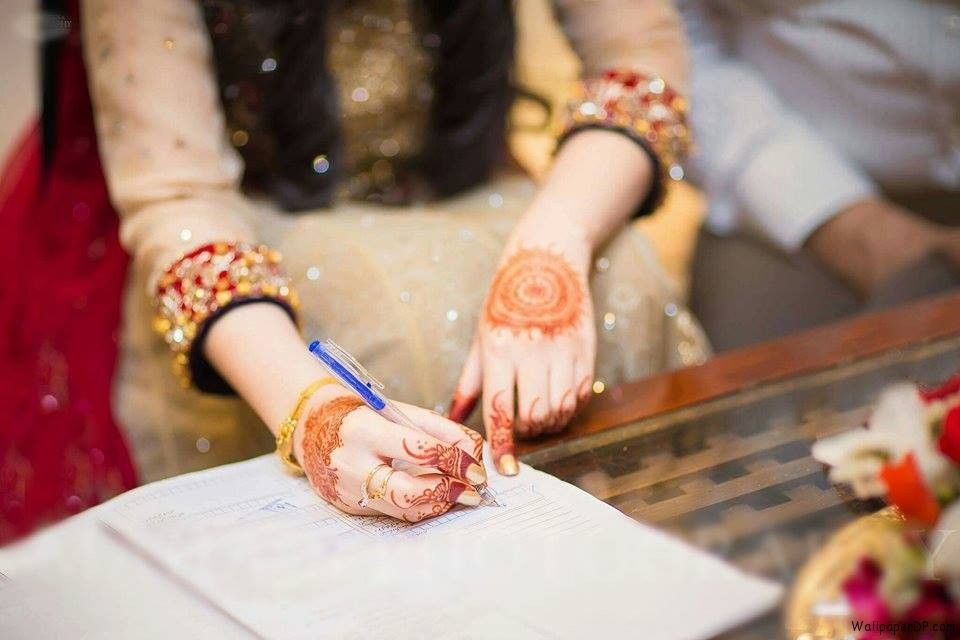
Second, the amount is stated clearly in rupees and recorded in the nikahnama, with an explicit note on whether it is mu'ajjal (prompt/immediately payable) or mu'akhkhar (deferred).
Third, both families treat the mahr as what it is: the wife's right and a sign of the husband's commitment, not a negotiation where one side "wins."Where it goes wrong is almost always when the conversation is delayed until the last moment, or when the figure is left vague ("we'll sort it out later"). That vagueness leads to mismatched expectations, family disputes, and in some cases, the wife's right going unfulfilled entirely.
If you are looking for a partner who approaches these conversations with sincerity, NikahForever was built for Indian and NRI Muslims who want a halal, intentional path to marriage, where discussions about mahr, family, and the future happen with honesty from the start.
Prompt vs Deferred Mahr: Which to Choose?
Mu'ajjal (prompt): payable immediately, according to the agreed terms. The wife receives her right immediately, and no debt carries into the marriage.
Mu'akhar (deferred): all or a portion of the mahr is promised at the nikah but paid at a later agreed date. Deferred mahr remains a binding debt on the husband. If he passes away, it must be settled from his estate before inheritance is distributed.
Many Indian Muslim families split the mahr into a prompt portion (often a smaller amount or gold jewellery given at the nikah) and a deferred portion (a larger sum payable on demand or at separation). This is valid, but comes with an important caution: a deferred mahr should never be treated as a figure nobody expects to be paid. It is a real obligation. Treating it as ceremonial undermines the wife's right and the purpose of mahr itself.
For a full understanding of what mahr means, why it is obligatory, and how it differs from dowry, see the comprehensive guide: Mahr in Islam: Meaning, Ruling, Types, and the Wife's Right.
Common Mistakes to Avoid
Demanding mahr as a status symbol. Families that inflate the mahr to signal wealth are inverting its purpose. Mahr is a gift of honour, not a price tag.
Pressuring the bride to forgive her mahr. A wife may voluntarily return part or all of her mahr (Quran 4:4), but this must be her genuine, unpressured choice. Pressuring her, whether directly or through family, is a violation of her right.
Keeping the mahr vague or undocumented. "We'll decide later" invites disputes. Specify the amount, the form, and whether it is prompt or deferred. Write it in the nikahnama.
Setting a mahr the husband cannot pay. A mahr that puts the husband in debt before the marriage begins breeds resentment. The Sunnah calls for ease, not hardship.