Mahr is the obligatory gift, in money, gold, or property that a Muslim groom gives directly to his bride as part of the marriage contract (nikah). It is her exclusive right and personal property, mentioned in the Quran in Surah An-Nisa (4:4), and it must be given whether the marriage is consummated or not. Mahr is sometimes called mehr or sadaq, and it can be paid immediately at the nikah (mu'ajjal) or deferred to a later, agreed date (mu'akhar). Crucially, mahr is the opposite of dowry: it flows from the groom to the bride, never the other way around.
This guide explains what mahr means, whether it is obligatory, its different types, how much it should be, and importantly for families in India how it differs from dowry (dahej).
What Is Mahr in Islam?
Mahr (Arabic: mahr, also sadaq) is the bridal gift a husband is required to give his wife upon marriage. It is not a fee paid to her family and not a symbolic formality. it is a binding right that becomes the wife's sole property the moment it is given. She alone decides how to use it, whether to spend it, save it, or invest it.
Allah commands in the Quran:
"And give the women [upon marriage] their bridal gifts graciously. But if they give up willingly to you anything of it, then take it in satisfaction and ease." (Surah An-Nisa 4:4)
The word sadaq shares its root with sidq, meaning sincerity- a reflection that mahr signals the husband's honest commitment to the marriage. Once received, the mahr belongs to the wife and no one else. Neither her father, nor her husband, nor any relative has a claim over it.
To learn how mahr fits within the wider marriage contract, see our guide on what nikah is.
Is Mahr Obligatory in Islam?
Yes. Mahr is an obligation (wajib) on the husband, established by the Quran, the Sunnah, and the consensus (ijma') of scholars. There is no valid disagreement that the wife is entitled to it.
A common misconception, however, is that a nikah is invalid without a mahr being named at the time of the contract. This is not correct. According to the Hanafi school- followed by the majority of Indian Muslims- a marriage remains valid even if no mahr is specified during the nikah. In that case, the wife becomes entitled to mahr al-mithl, a fair mahr equivalent to what women of comparable standing in her family receive. The obligation to pay never disappears; only the amount is determined later.
The majority of scholars across the four Sunni schools agree on the obligation itself, differing only in technical details such as the minimum amount. For a deeper look at the conditions that make a nikah valid, see our Fiqh of Nikah guide.
Mahr vs Dowry (Dahej): The Difference Every Indian Family Should Know
This is the single most misunderstood point about mahr in and getting it right matters.
Mahr is given by the groom to the bride. It is obligatory, it is her property, and Islam commands it.
Dowry (dahej) is given by the bride's family to the groom or his family. It has no basis in Islam, is often demanded under social pressure, and is illegal under Indian law (the Dowry Prohibition Act, 1961).
Confusing the two has caused real harm in Muslim communities in India, where the un-Islamic practice of dahej is sometimes wrongly justified in the name of marriage. The Quran is clear that wealth at marriage moves toward the bride, as a gift and a protection, not away from her. Rejecting dowry while honouring mahr is not just good practice; it is a return to what Islam actually prescribes.
Types of Mahr
Mahr is classified along two axes: how it is determined, and when it is paid.
By how it is determined
- Mahr al-Musamma (specified mahr): the mahr agreed upon and named by the couple in the marriage contract. It can be cash, gold, property, jewellery, or any item of value.
- Mahr al-Mithl (unspecified / customary mahr): the fair mahr the wife is entitled to when no amount was specified at the nikah, or when the named mahr was invalid. It is calculated by reference to what women of similar standing in her family typically receive. So even an "unspecified" mahr is never a waived mahr — the right remains intact.
By when it is paid
- Mu'ajjal (prompt mahr): paid immediately at the time of the nikah.
- Mu'akhar (deferred mahr): promised at the nikah but paid at a later agreed date. A deferred mahr is still a binding debt, if the husband dies, it is paid from his estate before inheritance is distributed.
Mahr can take almost any form of value. The Prophet ﷺ once approved a marriage where the husband had nothing to give but his knowledge of the Quran:
The Prophet ﷺ said, "Go, I have agreed to marry her to you for what you know of the Qur'an (as her Mahr)." (Sahih al-Bukhari 5135; also Sahih Muslim 1425)
For guidance on choosing an appropriate figure, see our detailed breakdown of how much mahr should be given.
The Wife's Right Over Her Mahr
Mahr is one of the clearest financial rights Islam grants a woman. It is hers — fully, exclusively, and without obligation to share.
The Quran affirms that even at the time of separation, a husband cannot reclaim what he has given:
"But if you want to replace one wife with another and you have given one of them a great amount [in gifts], do not take [back] from it anything." (Surah An-Nisa 4:20)
This means that once mahr is paid, the husband has no right to demand it back, regardless of its value. The mahr stands as a mark of honour and a measure of financial security for the wife- wealth that is hers to keep, giving her independence within the marriage and protection should it end. A woman may, of her own free will, choose to return part of her mahr as a gift (as 4:4 allows), but this must be her genuine choice, never the result of pressure.
How Much Mahr Should Be Given?
Islam sets no fixed upper limit on mahr, but it strongly encourages keeping it modest and easy. The Prophet ﷺ said:
"Marry, even with [a Mahr equal to] an iron ring." (Sahih al-Bukhari 5150)
The Prophet ﷺ gave his own wives a mahr of around 500 dirhams (Sahih Muslim 1426), and the Hanafi school sets a minimum of ten dirhams. A high mahr is permitted if the husband can afford it, but burdening a man with an amount that delays or prevents marriage runs against the spirit of the Sunnah.
Because the right amount depends on the husband's means, local custom, and the couple's circumstances — including how to think about it in Indian rupees — we cover the figures, the mahr fatimi reference, and how to decide a fair amount in a dedicated guide: How Much Mahr Should Be Given in Islam.
What Happens If Mahr Is Not Paid?
Withholding mahr is a serious matter. Mahr is treated in Islamic law as a debt owed to the wife, and unlike many debts, it does not lapse. If the husband refuses to pay it, the sin and the obligation remain on him; if he dies, it is settled from his estate before his heirs inherit.
We cover the rulings on unpaid mahr, mahr after divorce, and a wife's right to demand or forgive it in detail here: Withholding Mahr: The Ruling and Consequences.
Mahr in the Indian Muslim Context
For Muslim families in India and the NRI diaspora, a few practical points matter.
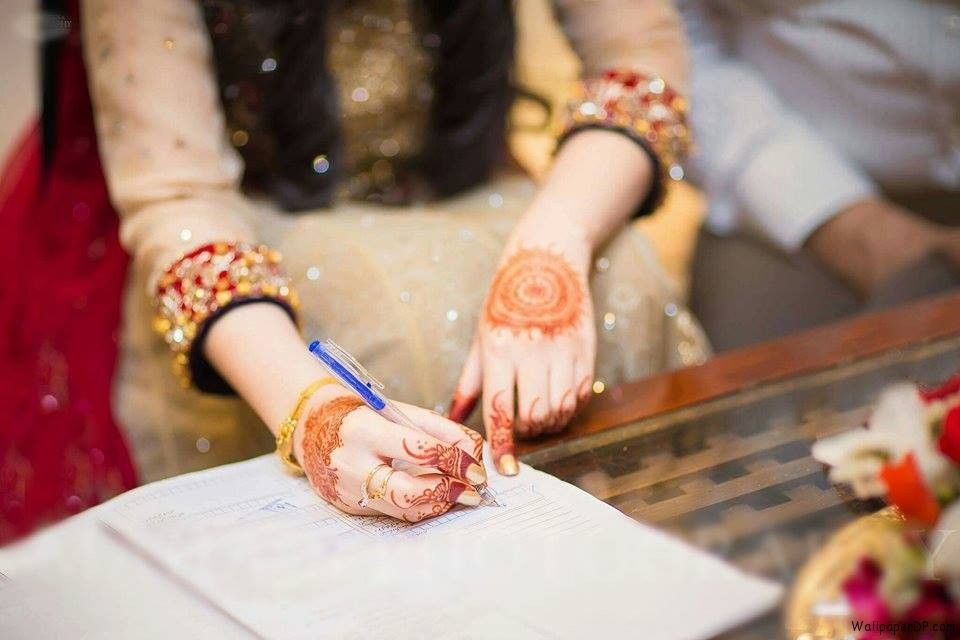
The mahr amount is recorded in the nikahnama and it is good practice to state clearly whether it is mu'ajjal (prompt) or mu'akhar (deferred), and the exact figure in rupees. A clearly documented mahr protects the wife's right and avoids disputes later. Where marriages are registered, the nikahnama serves as evidence of the agreed mahr.
Equally important is resisting the cultural drift toward treating mahr like a status symbol or, worse, blending it with dowry expectations. A simple, clearly recorded mahr- given gladly, reflects the Sunnah far better than an inflated figure offered under social pressure.
If you are beginning your search for a life partner who shares these values, NikahForever was built for Indian and NRI Muslims who want a halal, intentional path to marriage — where conversations about mahr, family, and the future happen with sincerity from the start.